
High-Power Smart Charging Solutions for Portable Power Stations & ESS
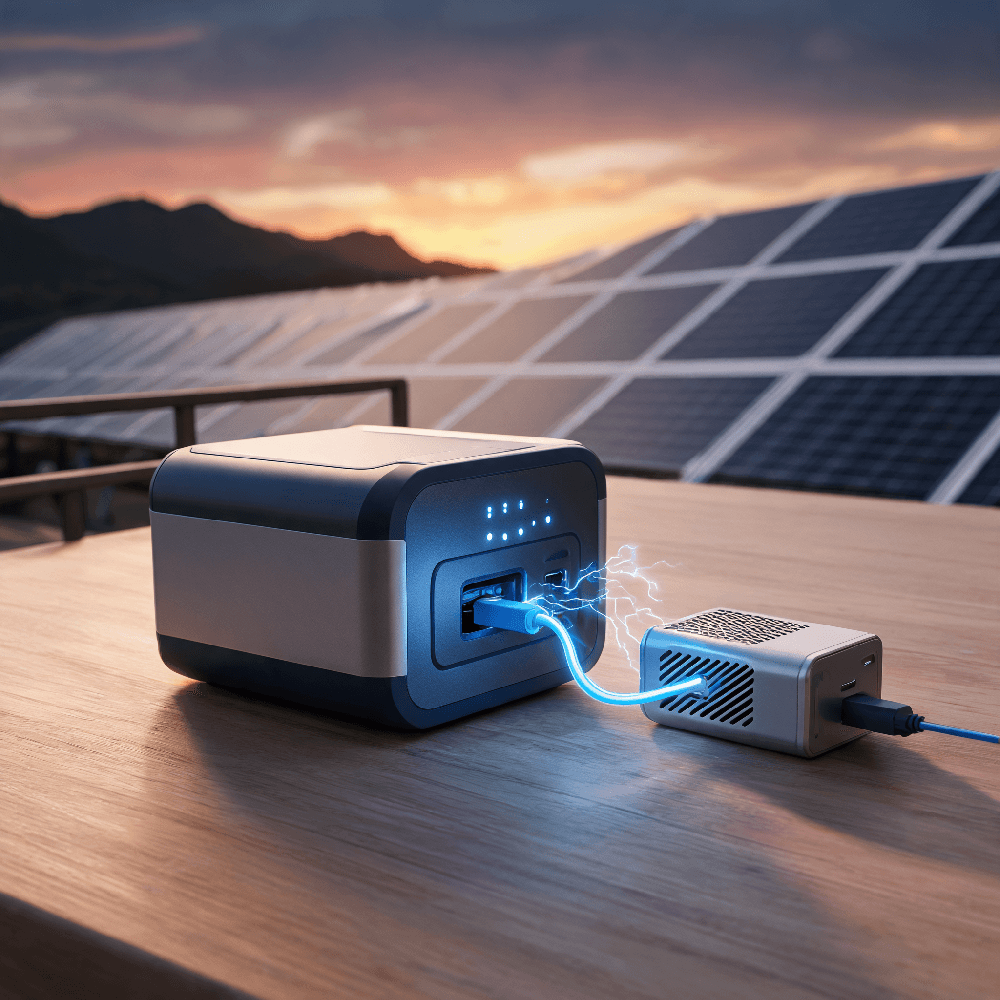
As global demand for outdoor energy, emergency backup, and mobile power surges, the reliability of a portable power station (PPS) or energy storage system (ESS) depends entirely on its charging speed and safety. High-capacity lithium battery packs require precision charging engineered to protect expensive cells and minimize downtime. At MEVKE, driven by our core mission — "Mevke | Charge Your World" — we manufacture industrial-grade, ultra-efficient OEM/ODM smart chargers specifically designed for portable power stations (ranging from 300 Wh to 5+ kWh platforms). ⚡ 1. Technical Matrix & Power Configurations MEVKE chargers utilize advanced resonant topologies (such as LLC/PFC) to deliver high-density power with up to 95% conversion efficiency, significantly reducing charging times for large-capacity storage systems.
As the global demand for renewable energy and off-grid power solutions continues to surge, portable power stations and energy storage systems (ESS) have become indispensable tools for outdoor adventures, emergency backup, and decentralized energy management. However, the true utility of these systems hinges on their ability to recharge quickly, safely, and intelligently. This is where high-power smart charging solutions step in as the critical enabler—transforming standard battery systems into flexible, high-performance energy hubs that meet the rigorous demands of modern users.
At the core of high-power smart charging lies a combination of advanced power electronics and intelligent control algorithms. These chargers support significantly higher wattage inputs, typically ranging from 500W to 3000W or more, allowing a portable power station to reach full capacity in a fraction of the time compared to conventional chargers. For instance, a 1000Wh battery pack can be fully replenished in under two hours when paired with a 600W intelligent charger, versus six to eight hours with a standard 150W unit. This dramatic speed improvement relies on sophisticated topologies such as gallium nitride (GaN) technology and multi-stage constant-current/constant-voltage (CC/CV) charging profiles, which minimize heat generation and optimize power transfer efficiency. Moreover, these solutions incorporate universal input voltage ranges (90–264V AC) and support multiple protocols like USB-C Power Delivery (PD), Quick Charge (QC), and even vehicle-to-load (V2L) interfaces, ensuring seamless compatibility with solar panels, AC outlets, and car ports alike.
Intelligence is what truly sets modern high-power chargers apart. Embedded microcontrollers continuously monitor key parameters including battery cell voltage, temperature, state of charge (SoC), and charge cycle history. By dynamically adjusting the charging current and voltage in real time, these systems prevent overcharging, deep discharging, and thermal runaway—prolonging battery lifespan by up to 30% compared to simple chargers. Smart features such as adaptive charging schedules (e.g., delayed start for off-peak electricity rates), remote firmware updates, and real-time mobile app integration provide users with unprecedented control. For example, an ESS operator can remotely lower the charging current when grid demand is high, or prioritize solar input during peak sunlight hours. Furthermore, advanced cell balancing, active heat dissipation via variable-speed fans, and built-in surge protection ensure reliable operation even under extreme environmental conditions, from freezing winters to scorching desert heat.
The practical applications of high-power smart charging solutions are vast and growing. For outdoor enthusiasts, a portable power station equipped with such a charger can be fully recharged during a short lunch break at a campsite using a compact solar array, enabling continuous use of electric cooking devices, medical equipment, or communication gear. In the residential sector, home ESS units paired with smart inverters can automatically switch between grid, solar, and battery charging modes, maximizing self-consumption of solar energy while maintaining a stable backup during outages. Commercial installations, such as remote telecom towers or agricultural monitoring stations, benefit from ruggedized smart chargers that can integrate with energy management systems (EMS) to prioritize charging based on available renewable generation or load demand. The ability to daisy-chain multiple chargers or incorporate bidirectional power flow further expands the architecture for microgrid and vehicle-to-home (V2H) scenarios.
Looking ahead, the convergence of high-power smart charging with emerging technologies like artificial intelligence (AI) and vehicle-to-grid (V2G) connectivity will redefine the role of portable power stations and ESS. Real-time energy forecasting and machine learning will enable chargers to anticipate usage patterns, negotiate utility pricing, and even sell excess stored energy back to the grid autonomously. As battery densities increase and GaN chargers become more compact, the next generation of smart charging solutions will deliver even faster speeds (e.g., 1C or 2C rates) while maintaining exceptional safety and efficiency. For businesses and consumers alike, investing in a high-power smart charging system is not merely an upgrade—it is a strategic move toward energy independence, cost savings, and a more resilient power infrastructure. By embracing these intelligent charging technologies, we unlock the full potential of portable and stationary energy storage in a rapidly electrifying world.